
Quick Summary
Sustainable waste management goes well beyond basic recycling, covering accurate sorting, energy-conscious equipment, consistent diversion tracking, and credible reporting that municipal and corporate partners increasingly require. Facilities building this approach typically combine upgraded sorting technology with disciplined maintenance, staff training, and ongoing data review rather than treating sustainability as a one-time initiative. Deciding whether to buy, lease, or rent equipment depends on volume confidence and available capital, and outside consulting often reveals overlooked bottlenecks. Facilities that track progress consistently tend to demonstrate steadier, more credible improvement over time.
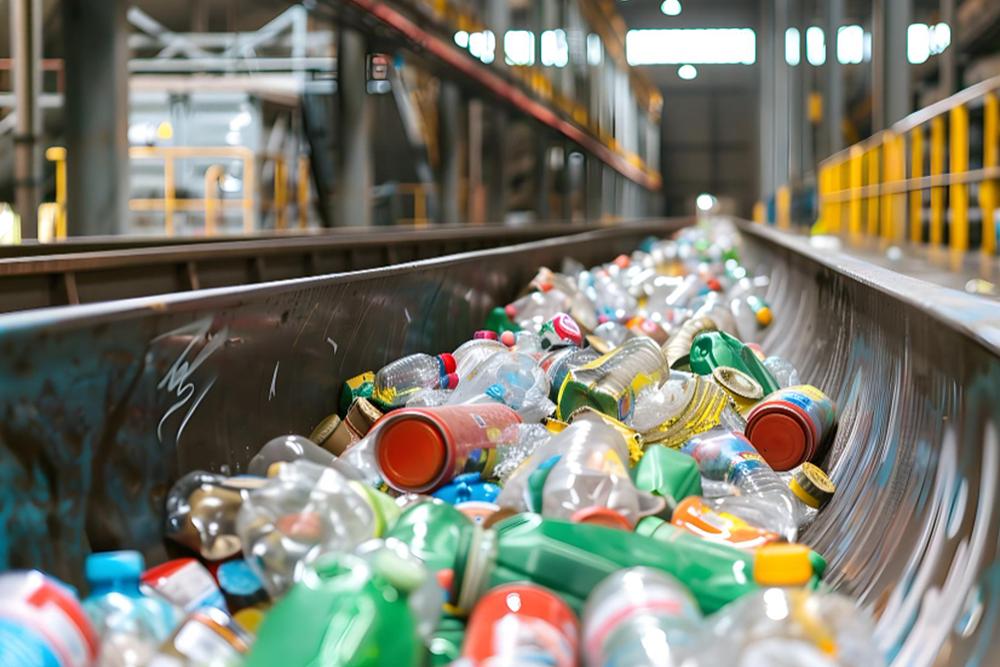
The phrase gets used often, but few facility teams have sat down and defined what it actually means for their own operation. Sustainable waste management is not a marketing slogan. It is a working approach to reducing landfill dependence, recovering more value from every ton processed, and operating in a way that holds up under increasing regulatory and community scrutiny.
For facility managers, understanding what this looks like in practice, rather than in theory, is the first step toward building an operation that performs well both financially and environmentally.
What Sustainable Waste Management Actually Involves
At its core, waste management built around sustainability principles focuses on diverting the maximum amount of material away from landfills while minimizing energy use, emissions, and waste generated by the recycling process itself.
This means going beyond simply sorting recyclables and instead looking at the entire lifecycle of material moving through a facility, from how it is collected and transported to how efficiently it is processed and where the recovered commodities ultimately end up.
A facility practicing genuine sustainability tracks diversion rates, monitors energy consumption of its equipment, and continually looks for ways to reduce contamination that would otherwise send recoverable material to disposal.
Why This Approach Has Become Business Critical
Sustainability in this industry used to be treated as a public relations consideration. That has changed. Municipal contracts increasingly require documented diversion rates as a condition of service.
Corporate clients sending commercial waste to third-party processors often need proof of responsible handling for their own environmental reporting. And landfill capacity constraints in many regions mean disposal costs will only continue climbing, making diversion an economic necessity rather than an optional extra.
Facilities that treat sustainable practices as a core operational strategy, rather than an afterthought, tend to be better positioned for both new contracts and long-term cost control.
The Building Blocks of a Sustainable Operation
- Accurate material sorting: The foundation of any sustainable program is the ability to separate incoming material efficiently and accurately. Modern optical sorters, screens, and eddy current separators recover far more clean commodity from mixed streams than manual sorting alone, directly increasing diversion rates.
- Efficient compaction and baling: Dense, well-formed bales reduce transportation frequency and cost, since more material moves per truckload. Equipment matched to actual throughput, rather than undersized or oversized for the job, keeps this process running smoothly.
- Energy-conscious equipment choices: Newer hydraulic systems and motor designs consume less energy per ton processed than older equipment, which contributes to both cost savings and a smaller operational footprint.
- Data tracking and reporting: Facilities that measure diversion rates, contamination percentages, and energy use by equipment line can identify where improvements will have the greatest impact, rather than guessing.
- Staff training and process discipline: Even well-designed equipment underperforms if operators are not trained to run it correctly or if front-end contamination is not addressed at the source.
Reporting and Documentation Matter More Than Ever
Many facilities now find themselves needing to demonstrate their environmental performance to municipal partners, corporate clients, or regulatory bodies, and doing this well requires more than a rough estimate at year end.
Sustainability reporting support helps facilities translate day-to-day operational data into the kind of documentation stakeholders now expect, covering diversion rates, tonnage recovered by material type, and equipment efficiency over time.
Building this reporting capability into daily operations, rather than scrambling to reconstruct it annually, makes the process far less burdensome and produces more credible, defensible numbers.
Deciding How to Acquire the Right Equipment
Building or upgrading toward a more sustainable operation almost always involves an equipment decision, and facilities do not all need to approach that decision the same way. The choice to buy, lease, or rent should reflect how confident a facility is in its projected volume, how much capital is available, and how quickly the equipment landscape in that particular material category is changing.
Purchasing suits core, long-service equipment expected to run for a decade or more. Leasing works well for facilities that want predictable payments while preserving cash for other capital needs. Renting is often the smartest path for facilities piloting a new sorting technology or bridging a temporary capacity gap before committing to a permanent solution.
Getting Expert Guidance Along the Way
Very few facility teams have the bandwidth to research every available technology, benchmark it against their own throughput needs, and design an optimal layout entirely on their own. This is where recycling consulting services tend to deliver outsized value.
An experienced consultant can walk a facility through its current process, flag where material is being lost or mishandled, and recommend a realistic upgrade path that balances sustainability goals against budget constraints.
Because these consultants typically have hands-on plant operation experience themselves, their recommendations tend to be grounded in what actually works on the working floor rather than theoretical best practices.
The Often-Overlooked Support Equipment
Large capital equipment tends to dominate planning conversations, but a sustainable operation depends just as much on the smaller machines that keep material flowing between major processing steps. Conveyors, screeners, and other miscellaneous recycling equipment often determine whether a facility's overall diversion rate lives up to its potential, since a poorly placed conveyor or missing screen can quietly send recoverable material toward disposal without anyone noticing until the numbers are reviewed.
Measuring Progress Over Time
Sustainability is not a one-time project that gets completed and set aside. Facilities that sustain genuine progress track a handful of key metrics consistently: diversion rate as a percentage of total material handled, contamination rate in outgoing bales, energy consumption per ton processed, and equipment downtime.
Reviewing these figures on a regular cadence, rather than only when a contract renewal or audit forces the issue, allows a facility to catch small problems before they become expensive ones and to demonstrate steady, credible improvement to the partners who are increasingly asking for it.
Common Mistakes Facilities Make Along the Way
Even well-intentioned sustainability efforts stumble in predictable ways. Some facilities invest heavily in a single flashy piece of sorting technology while neglecting the conveyors, screens, and other supporting equipment that determine whether that investment actually performs as advertised.
Others focus entirely on outbound reporting numbers without first fixing the operational issues those numbers are meant to reflect, effectively polishing the presentation rather than the process. A third common mistake is treating sustainability as a fixed destination rather than an ongoing practice, letting hard-won gains in diversion rate or contamination erode once the initial push for improvement fades.
Avoiding these pitfalls generally comes down to sequencing: fix the operational fundamentals first, then build the reporting and communication layer on top of a genuinely improved process.
Bringing it All Together
A truly sustainable waste management operation is not defined by any single machine, certification, or report. It is the cumulative result of accurate sorting, efficient and well-maintained equipment, disciplined data tracking, trained staff, and a willingness to keep refining the process as conditions change.
Facilities that approach it this way, rather than searching for one decisive fix, tend to build operations that hold up under regulatory scrutiny, perform well financially, and adapt more easily as material streams and client expectations continue to evolve.
Start Building a More Sustainable Operation
Whether you are upgrading equipment, refining your sorting process, or need help documenting diversion performance, our team at US Recycling Equipment can help. Get in touch to talk through your facility's next step.
FAQs
What does sustainable waste management mean for a recycling facility?
It means actively reducing landfill dependence through accurate sorting, efficient equipment, and consistent tracking of diversion rates, rather than treating recycling as a secondary activity.
Why are municipalities requiring more sustainability documentation now?
Many municipal contracts now tie service renewal to demonstrated diversion performance, pushing facilities to formalize reporting practices that were once informal or inconsistent.
Should a facility buy or lease equipment to support sustainability goals?
It depends on projected volume and capital availability. Long-term core equipment often makes sense to purchase or lease, while newer or unproven technology may be better rented first.
How can recycling consulting services help with a sustainability upgrade?
A consultant can assess an entire facility's workflow, identify where recoverable material is being lost, and recommend equipment or process changes grounded in real operating experience.
What equipment has the biggest impact on diversion rates?
Sorting technology, including optical sorters and screens, tends to have the largest single impact, though conveyors and other supporting equipment often determine whether that technology performs at its full potential.