


Quick Summary
Container choice comes down to four factors working together, which are waste volume, material density, site access, and how often you want trucks arriving. Open containers like roll-offs, front-loads, and rear-loads suit temporary or scheduled collection, while lowboys handle dense material that hits weight limits early. Compactor-fed systems change the equation further, since receiver boxes, stationary units, self-contained models, and pre-crushers all reduce hauling frequency by compressing waste before pickup. Matching the container to the actual waste stream keeps costs predictable and prevents overflow.
Waste piles up faster than most operations expect it to. A single retail store, a busy kitchen, or an active job site can fill a container long before the scheduled pickup arrives, and that gap turns into overflow, extra hauls, and fees nobody budgeted for. The container sitting in your yard shapes how often trucks visit, how much space you give up, and how much you pay at the end of each month. Yet plenty of businesses inherit whatever bin came with the property and never revisit the decision until something goes wrong. The different types of dumpsters exist for a reason, since each one was built around a specific waste stream, site layout, and service rhythm.
Let's look at what separates one from another.
1. Roll-Off Containers
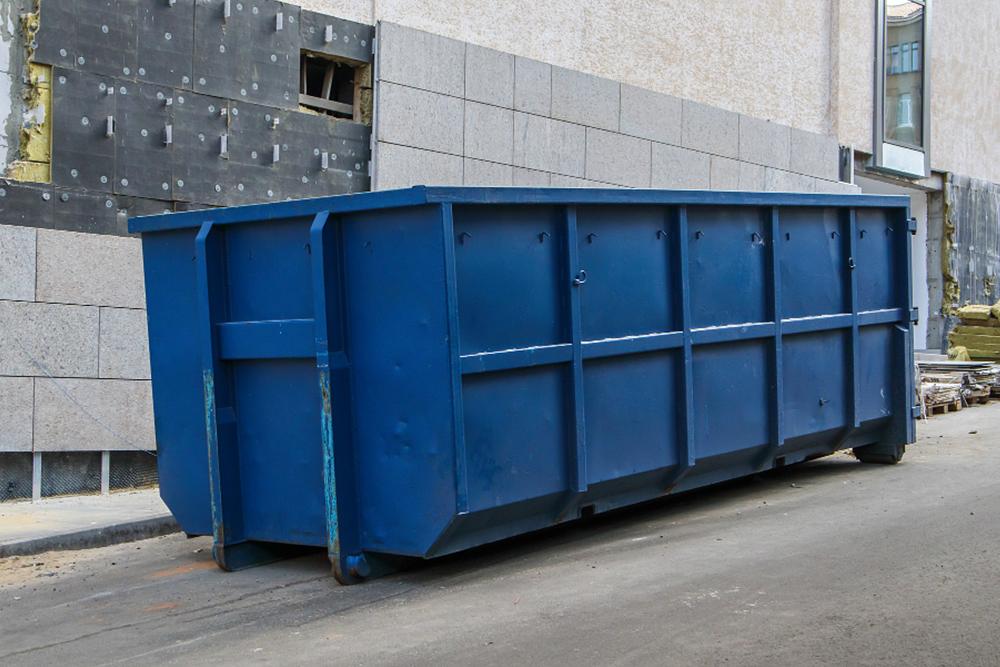
Most people picture one specific container the moment they hear the word dumpster, and this open-top workhorse is almost always the one. A specialized truck slides the box off its bed and onto your site, then returns later to haul the full load away. A swinging door at one end lets crews walk debris straight in rather than lifting every heavy piece up and over the wall. Sizes commonly run from 10 to 40 cubic yards, and the volume you generate drives that decision more than the available space does. Body style deserves your attention too, since rectangular models handle dense material and hold their shape under repeated heavy loading. Tub versions taper toward the base with smooth walls that release material cleanly when the truck tips them, which suits lighter and bulkier debris well.
2. Front-Load Dumpsters
Walk behind almost any restaurant, retail center, or apartment building and you will find the same squat steel box waiting there. These units typically hold between 2 and 8 cubic yards, which places them well below roll-off capacity. A slanted lid keeps rain and snow out of the load, while sleeves on either side give the truck somewhere to insert its forks. The driver lifts the whole container overhead, empties it into the hopper, and lowers it back into position without ever leaving the cab. That speed explains why they suit steady, predictable waste that arrives on a weekly or twice-weekly service schedule. Heavy construction debris remains a poor fit, since the lifting arms carry firm weight limits that a load of concrete passes quickly.
3. Rear-Load Dumpsters
Overhead clearance disappears fast in older commercial districts, and that single limitation rules out the front-load design entirely. The answer hooks onto the back of the container instead, then uses a winch to tip the load into the packer. That method allows a taller and narrower profile, built around a slanted back panel and a hinged access door. Alleys, tight loading docks, and enclosed courtyards all become workable once you switch to this particular style of container. Capacity often edges slightly above that of a comparable front-load unit occupying the same amount of ground space. Staff feel the trade-off during loading, since the high back wall asks more of anyone tossing material in by hand.
4. Lowboy And Heavy-Debris Containers
Weight limits arrive long before a box looks anywhere near full when the material inside is dense. Concrete, brick, soil, roofing tear-off, and aggregate all belong to that category, which is why containers built for them stay deliberately small. Lowboy models sit closer to the ground with shorter side walls, so crews can load them by wheelbarrow or skid steer without fighting gravity. Road regulations set the ceiling here, and haulers apply a maximum tonnage to every container size running on public streets. Exceeding that figure triggers an overage charge capable of rivaling the entire original rental cost of the box itself. Ordering a smaller box for dense material proves cheaper nearly every single time.
5. Toters and Wheeled Carts
Nobody really calls these containers dumpsters, yet they handle a large share of everyday waste inside commercial buildings. Wheeled carts usually range from 35 to 96 gallons and roll easily to wherever your staff need them at the moment. Offices, break rooms, hotel floors, and multi-unit residential buildings rely on them to gather material before it reaches anything larger outside. Color-coded lids turn a row of them into a simple sorting station for cardboard, mixed recycling, and organics right where waste appears. A cart tipper can then lift and empty each one directly into a compactor, which keeps manual handling out of the process entirely.
6. Receiver Boxes
Pairing a container directly with a compactor changes what a single pickup is able to carry. Waste enters the compactor first, gets crushed under hydraulic pressure, and then moves into a sealed closed-top box waiting behind the unit. That extra step rewrites the entire math on your hauling bill, since a compacted load carries far more material per pull than a loose one. Operations moving away from open containers often cut their total number of annual hauls by half or better. The closed top delivers a second advantage, as it stops wind from scattering debris and prevents passersby from dumping their own trash into your container. Capacities of 30, 40, and 50 cubic yards cover most sites, and the right choice follows from your compaction ratio and your pickup frequency.
7. Stationary Compactors
Some equipment never leaves the property, and that arrangement suits high-volume dry waste better than anything else available. The unit mounts on a concrete pad, connects to power, and pushes material through a chute into a detachable roll-off container. Once the box fills, a truck hauls it away and drops an empty one into position, while the compactor itself stays exactly where it sits. Warehouses, distribution centers, and manufacturing floors all fit this profile closely, given the steady flow of packaging waste they produce. Cardboard and film plastic respond especially well to compression and occupy only a small fraction of their loose volume afterward. Liquid-bearing waste calls for a different design, since fluid can escape at the seam where the compactor body meets the container.
8. Self-Contained Compactors
Welding the ram and the container into a single body removes the one weak point that liquid always finds. No seam exists between the two halves, so fluid stays inside the unit instead of running out across your pavement. That single design decision makes this equipment the standard answer for wet waste of nearly every possible description. Grocery stores, restaurants, hotels, hospitals, and food processing plants all generate material that leaks, smells, and draws pests once it sits in an open bin. Sealing the load controls odor and drainage, while compression inside the chamber lowers pickup frequency and hauling spend at the same time. Capacities commonly land between 8 and 35 cubic yards, and the entire assembly leaves on the truck each time it fills.
9. Pre-Crusher Containers
Cardboard and packaging pose little challenge to standard equipment, though anything rigid or oversized brings the same machines to a halt. A heavier ram and a much wider charge box close that gap through sheer force. Pallets, crates, drums, furniture, and thick plastic get broken down thoroughly before they ever enter the container behind. Loads then fill the box properly, rather than one awkward item wasting all the space around it. Manufacturing plants, distribution hubs, and large retail operations tend to see the strongest return from this class of equipment. Upfront cost runs higher, though the investment pays back over time through fewer hauls and less damage to downstream machinery.
10. Apartment-Style Compactors
Multi-family properties face a narrow version of the same problem, which is high waste volume inside a very small footprint. Equipment built for these buildings sits at the base of a trash chute and compresses whatever falls through into a waiting container. Shorter models clear low ceilings in rooms where a full-size unit would never fit beneath the beam overhead. Residents keep using the chute exactly as they always have, and the machine handles everything afterward without staff involvement. Property managers gain fewer overflowing trash rooms, fewer resident complaints, and a noticeably cleaner building overall.
Getting The Right Container onto Your Site
Every option covered here answers a different question about your operation. Volume, material density, site access, and service frequency all pull the decision in their own direction, and the best container is the one that satisfies all four at once rather than three out of four. A box that fits your yard but forces weekly pickups will cost more over a year than a larger unit that goes out monthly. Compaction shifts that equation further still, turning hauling frequency into something you control instead of something you absorb.
Our team has spent decades helping recyclers, municipalities, and commercial operations work through exactly this decision. We stock roll-off containers, receiver boxes, totes, and a full range of compactors in new, used, and refurbished condition, and we can also arrange leasing or rental when buying outright is not the right move. Beyond the equipment itself, we handle installation, removal, preventive maintenance, parts, and repairs, so your system keeps running long after delivery day. Larger facilities can also draw on our consulting and custom design work to plan an entire waste flow from the ground up.
Reach out to us today and let's find the container that fits your operation properly.
FAQs
What size dumpster do I need for a renovation project?
Volume and material weight both influence that answer. Lighter debris such as drywall, cabinetry, and fixtures fills space quickly, so a 20 or 30 cubic yard roll-off usually works well. Dense material like tile, concrete, or plaster reaches the weight limit long before the box looks full, which makes a smaller container the safer choice.
Is a compactor worth it for a small business?
Waste volume determines that more than business size does. Operations filling an open container more than twice a week often recover the investment through reduced hauling fees within a couple of years. Businesses generating wet or odorous waste see value sooner, since sealed units control drainage and pests regardless of total tonnage.
What is the difference between a receiver box and a self-contained compactor?
Separation is the key distinction. A receiver box detaches from a stationary compactor that stays bolted to the pad, which suits dry waste at high volume. A self-contained unit welds the compactor and container into one sealed body that leaves on the truck together, making it the standard option for wet waste.