


9 Types of Recycling Equipment Used for Commercial Recycling
Published:
Quick Summary
Commercial recycling relies on matching each machine to a specific material and volume. Vertical balers suit compact back rooms, horizontal and two-ram balers serve high-volume and mixed-material sites, and stationary compactors pair with receiver boxes for roll-off hauling. Shredders, conveyors, foam densifiers, cart dumpers and drum crushers handle size reduction, material flow and specialty waste that standard balers cannot.
Walk through the back of almost any warehouse, grocery store or manufacturing plant, and you will likely find the same stubborn challenge piling up. Boxes, plastic film, foam packaging and empty containers arrive faster than crews can haul them away. Left unmanaged, that material eats floor space, slows loading docks and drives up hauling bills week after week without anyone noticing. Businesses that handle it well usually rely on a carefully chosen mix of recycling equipment, with each machine assigned to a specific job. So which machines belong in a commercial recycling operation, and what does each one do best?
1. Vertical Balers for Compact Spaces
Cramped back rooms at convenience stores, restaurants, hotels and hospitals rarely have space for large machinery, so compact balers fit naturally there. Operators open a front door, load cardboard or plastic into the chamber, and close it before a hydraulic ram presses the material from the top down. After several cycles, the chamber fills and staff thread baling wire through channels to tie off a finished bale. A chain or kicker system then pushes the bale out for storage or later pickup.
These downstroke balers work best for sites producing low to moderate volumes, and they plug into existing workflows with very little disruption or training. For a business that currently pays to haul loose boxes, a single unit can shrink storage needs, reduce pickups and turn waste cardboard into a clean, sellable commodity.
2. Horizontal Balers Built for High Volume
Busy distribution centers, big-box stores and printing plants generate recyclables in quantities that would overwhelm a vertical unit. Horizontal models handle that load by accepting material from a conveyor, hopper or loading chute and compressing it sideways into an enclosed chamber. For the highest volumes, auto-tie versions tie every bale with wire automatically, so production keeps running across long shifts with minimal staff involvement.
Sites with moderate output often choose closed-door models, which typically cost less and have operators tie each bale by hand once the chamber door opens. Either way, you get heavy, uniform bales of cardboard, paper or plastic that buyers prefer and trucks load efficiently. For operations filling multiple dumpsters with cardboard each week, those bales mean fewer hauls and better commodity pricing, so horizontal balers often pay for themselves quickly.
3. Two-Ram Balers That Switch Between Materials
Facilities handling several commodities at once face a tricky problem every day, since one leftover scrap of plastic can contaminate a cardboard bale. Two-ram machines answer that challenge with a pair of hydraulic cylinders working at right angles. A main ram compresses material against a closed gate, and a second ram ejects the finished bale through a separate opening. That ejection step empties the chamber completely between bales, so operators can switch from cardboard to aluminum or plastic bottles without cross-contamination.
These heavy-duty units produce exceptionally dense bales and handle tough materials that lighter balers often struggle with. Material recovery facilities, municipal recycling centers, large distribution hubs and scrap operations rely on them when they need one machine to process a wide range of recyclables throughout the day without sacrificing bale quality or throughput.
4. Stationary Compactors Paired With Receiver Boxes
Dry recyclables and general waste sometimes make far more sense compacted than baled, especially when a hauler already services the site with roll-off trucks. A stationary compactor bolts to a concrete pad and pushes material through a feed chute into a detachable receiver box. When that receiver fills, the hauler swaps it for an empty one and the compactor stays firmly in place.
Retail centers, shopping malls, hospitals and manufacturing plants often feed these units through a wall chute or loading dock, keeping trash and cardboard neatly out of public sight. Compaction packs far more material into each haul, which cuts the number of trips and lowers monthly transportation costs. For wet waste such as food scraps, self-contained compactors give you a cleaner alternative that combines the ram and container in one sealed, leak-resistant body.
5. Industrial Shredders
Some materials need to be torn apart before anyone can recycle, densify or securely destroy them, and that job falls to dedicated size reduction machines. Rotating shafts fitted with hardened cutting knives reduce bulky items to small, uniform pieces that pack tightly and feed consistently into downstream balers, granulators and separators. That makes shredding a natural first step for plastic purgings, wooden pallets, carpet, textiles and scrap tires.
The same process also protects sensitive information, turning confidential records and hard drives into unrecoverable fragments for hospitals, banks and other businesses with data security obligations. Capacity scales with the workload, from compact 48-inch machines to large industrial shredders that process up to 2 tons per hour. Modern models round out the package with touch-screen controls and dust collection systems that shield operators from airborne particles.
6. Conveyor Systems That Keep Material Moving
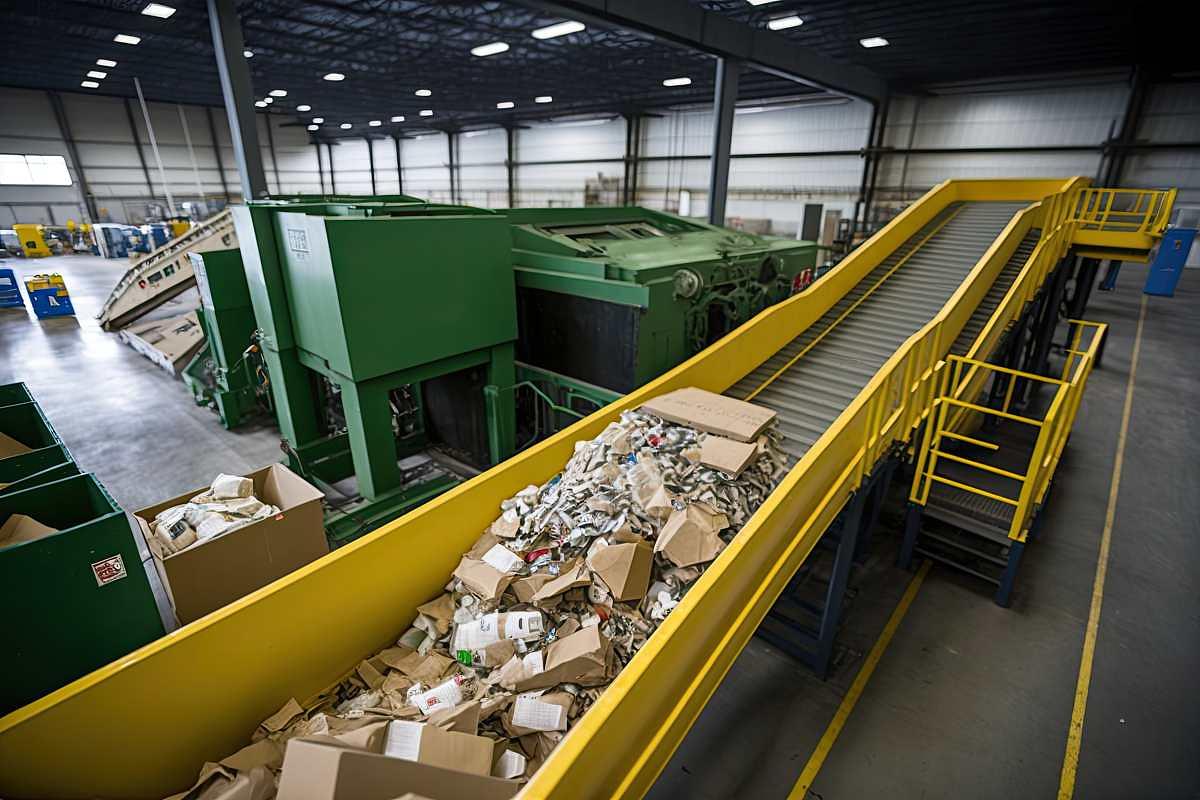
Every minute a skilled worker spends carrying boxes across a facility is a minute lost from more productive work. Belt, roller and incline conveyors solve that problem by carrying material from receiving areas or sorting stations directly into balers, shredders and compactors. Gravity roller lines suit light packages and cartons, while powered belt systems handle heavier loads and loose recyclables over longer distances and steeper inclines.
Sorting conveyors add stations where workers pull out contaminants or separate materials by type before baling begins. Proper guarding, emergency stop cords and well-placed transfer points keep crews safe around belts, rollers and other moving parts. A well-designed conveyor layout also lets a single baler serve several departments at once, raising overall equipment utilization while reducing manual lifting, cart traffic and the injuries that often come with them.
7. Foam Densifiers for Bulky Polystyrene
Expanded polystyrene packaging, often called foam, protects electronics, appliances and furniture beautifully during shipping, yet it creates headaches once it arrives. Since the foam is mostly air, a full dumpster of it weighs very little and costs a small fortune to haul away. Densifiers fix that frustrating imbalance quickly. Hot-melt models heat the foam until it collapses into solid ingots, while cold-press units use a screw or ram to compress it into dense logs without heat.
The finished blocks take up a tiny fraction of the original space and can be sold to plastics processors for new products such as picture frames and molding. Retailers, furniture distributors, hospitals and electronics recyclers that handle steady foam volumes often find densifiers among the fastest ways to cut disposal costs while keeping bulky packaging out of landfills.
8. Cart and Gaylord Dumpers
Lifting heavy bins by hand is one of the quickest ways to slow production and injure employees. Hydraulic dumpers take that strain off your team by raising carts, totes or gaylord boxes and tipping their contents into a baler, hopper or container. Gaylords, the large corrugated bulk boxes common in manufacturing, can weigh hundreds of pounds when fully loaded, and quality box dumpers handle loads of several thousand pounds with ease.
Models vary by lift height, dump angle and whether they load from the front or side. Some units mount permanently beside a baler, while others move around a facility on a forklift. Pairing a dumper with a horizontal baler or shredder creates a smooth, repeatable loading process that keeps material flowing steadily and helps reduce painful back and shoulder injuries on busy shifts.
9. Drum Crushers for Empty Steel Drums
Manufacturers, auto shops, food processors and chemical users often accumulate stacks of empty 55-gallon drums that take up valuable floor space. A crusher uses a hydraulic or pneumatic platen to flatten each drum into a flat disc only a few inches tall. That reduction lets a facility store dozens of drums in the footprint once needed for a handful.
Flattened drums ship more efficiently to scrap metal buyers, turning a cluttered storage problem into a small but steady revenue stream. Drums that held hazardous materials must meet federal empty container rules before crushing, and some crushers include filters or collection trays to manage any residual liquids. Enclosed crushing chambers and two-hand controls protect operators during each cycle, which makes these machines a safe, simple addition to any shop that handles bulk liquids regularly.
Building the Right Equipment Lineup for Your Facility
Commercial recycling rarely depends on one machine working alone. Real efficiency comes from pairing equipment that suits your materials, volume and floor plan, then connecting each piece so material moves smoothly from the dock to the truck. A facility that sizes its lineup carefully spends less on hauling and labor, earns more for its commodities and keeps employees safer on every shift.
At US Recycling Equipment, we help businesses, property managers and municipalities across the region build that kind of system. Our team brings years of hands-on plant operation experience to equipment selection, so every recommendation we make reflects how machines perform on a real production floor. Explore our new, used and refurbished equipment, available to buy or lease for commercial operations of every size and budget. Short-term needs can be covered with our equipment rental options, and you can browse our miscellaneous recycling equipment for specialty machines. Not sure where to start or which machine comes first? Our recycling consulting service reviews your waste stream, layout and goals to map out a lineup that fits your budget today and grows with you tomorrow.
Let's find the right machines for your operation together. Call our friendly Denver team, send a contact form or request a quote to get started on a lineup built around your goals.
FAQs
What is the difference between a vertical and a horizontal baler?
A vertical baler compresses material from the top down, takes up little floor space and is loaded and tied by hand, which suits lower volumes. A horizontal baler compresses material sideways, often feeds from a conveyor and can tie bales automatically. Horizontal units handle much higher volumes and suit distribution centers, big-box stores and recycling facilities.
Should my business buy, lease or rent equipment?
Buying makes sense when volume is steady and you plan to use the machine for years. Leasing spreads the cost into predictable payments and preserves working capital. Renting works well for seasonal peaks, trial periods or short projects. Used and refurbished equipment can lower upfront costs further, especially for proven machines like balers and compactors.
How do I know which machines my facility needs?
Start by measuring which materials you generate and how much of each per week. Cardboard volume usually decides the baler type, while foam, drums or confidential records may call for specialty machines. Floor space, power supply, hauler capabilities and labor availability also shape the choice. A site assessment from an experienced equipment provider can map out the right lineup.