
7 Municipal Solid Waste Facts You Should Know
Published:
Quick Summary
Municipal solid waste includes discards from businesses, schools and hospitals as well as homes, and Americans generate about 4.9 pounds of it per person each day. Modern landfills rely on liners, leachate systems and groundwater monitoring, while food remains the largest buried material and a major methane source. Machines handle most recycling sorting, contamination can ruin entire loads, and clean, dense bales sell best in commodity markets.
Picture the truck that rolls past your building each week, then multiply it by every street in the country. That routine moves an enormous volume of material through transfer stations, sorting plants and landfills few people ever notice. Over the past six decades, communities have rebuilt that system from open dumps into a network of engineered sites and processing facilities. Even so, a handful of municipal solid waste facts still catch experienced facility managers by surprise. Which of these will change the way you look at your own waste stream?
1. Municipal Solid Waste Covers More Than Household Trash
Kitchen bags and curbside carts make up only one part of the picture. The category also includes everyday discards from offices, retail stores, restaurants, schools and hospitals, so property managers and facility directors share responsibility for it alongside homeowners. Packaging, food scraps, yard trimmings, furniture, appliances and electronics all fall inside the definition. Construction and demolition debris sits outside it, along with industrial process waste and municipal wastewater sludge, and each of those streams is tracked separately. Knowing where the line falls helps you choose the right hauler, container and processing equipment. It also keeps you from mixing materials that separate facilities and permits handle under different rules.
2. Americans Generate Nearly 5 Pounds of Waste a Day
Scale is where the story gets striking. The latest national figures, which cover 2018, put annual generation at 292.4 million tons, or about 4.9 pounds per person per day. Back in 1960, that daily figure sat at roughly 2.7 pounds, so the typical American now throws out nearly twice as much. For a city of 100,000 residents, the daily rate adds up to about 245 tons arriving at collection points. Packaging, food scraps and yard trimmings fill much of that flow, with paper and cardboard forming the single largest share. Volume like that explains why transfer stations and processing plants run on heavy equipment built for long shifts.
3. Modern Landfills Are Engineered Containment Systems
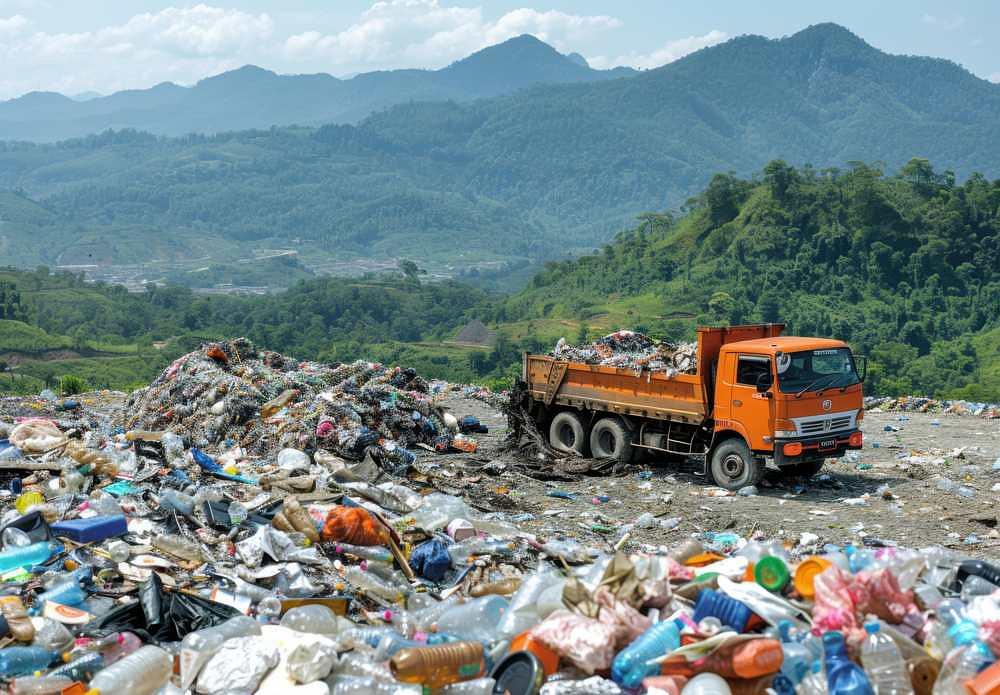
Forget the image of an open dump full of gulls. Federal rules require modern municipal landfills to sit away from faults, wetlands and flood plains, and to rest on a composite liner that pairs a membrane with two feet of compacted clay. A leachate collection system draws contaminated liquid off that liner for treatment. Operators compact incoming waste and cover it with soil to control odors and pests, while monitoring wells check groundwater for any sign of a leak. Even after closure, owners must maintain the final cover and keep watching the site for decades. Plenty of sites capture landfill gas and turn it into electricity or fuel.
4. Food Is the Largest Material Buried in Landfills
Nearly a quarter of everything sent to landfills is food, more than any other single material. Leftovers, spoiled produce and kitchen scraps break down without oxygen once buried, and that process releases methane. That gas traps at least 28 times more heat than carbon dioxide over a century, which helps explain why landfills rank as the third-largest source of human-related methane in the country. Food also causes trouble long before it reaches a landfill. Wet residue soaks into paper and cardboard, so keeping organics separate protects the value of every recyclable bale. Diverting organics to composting or anaerobic digestion turns that problem into soil amendments and renewable energy.
5. Most Recyclables Are Sorted by Machines
Inside a material recovery facility, people still play an important role, yet machines do most of the heavy lifting. Mixed recyclables from single-stream programs ride a conveyor past rotating disc screens that lift flat paper and cardboard away from bottles and cans. Overhead magnets pull out steel, while eddy current separators push aluminum off the line with a spinning magnetic field. Optical sorters then use light sensors and bursts of air to separate plastics by resin type. Workers at quality control stations catch what the machines miss. At the end of the line, balers press each material into tight, uniform blocks ready for sale to mills and processors.
6. Contamination Can Turn Recyclables Into Trash
Good intentions sometimes cause the biggest problems. Recycling professionals call it wishcycling, the habit of tossing questionable items into the recycling cart and hoping for the best. Plastic grocery bags and stretch film wrap tightly around disc screens and force crews to shut down lines for cleaning. Greasy food containers, garden hoses, clothing and batteries also slip in, and some of them damage equipment or start fires. Once a load carries too much contamination, buyers may downgrade it or reject it entirely, sending perfectly good material to the landfill. Clear labels, staff training and smart bin placement go a long way toward keeping your entire recycling stream clean.
7. Recycling Runs on Commodity Markets
Every bale that leaves a sorting facility is a product with a buyer. Paper mills purchase old corrugated cardboard, steel mills buy scrap cans, and plastics processors bid on sorted resins. Like any commodity, those prices rise and fall with global demand, and they can shift sharply when trade rules change. In 2018, China tightened restrictions on imported scrap paper and plastic, and recyclers across the country had to find new buyers and meet stricter quality standards almost overnight. Through every swing, one pattern holds steady. Clean, dense, well-tied bales sell more easily and command better prices, so horizontal balers sit at the heart of most operations.
Putting These Waste Facts to Work at Your Facility
Waste rarely stays simple once you look closely. Every container that leaves a building enters a system shaped by regulations, machinery and markets, and small choices at the start of that chain decide how much value survives to the end. The better you understand those moving parts, the easier it becomes to cut hauling costs, protect your equipment and send cleaner material to market.
At US Recycling Equipment, we spend every working day helping municipal and commercial operations make those choices with confidence. Our team draws on decades of plant operation experience to recommend new, used or refurbished equipment that fits your material and space, whether you plan to buy or lease. Once your line is running, our preventive maintenance program helps it stay productive and safe for years. For a plan built around your waste stream, our recycling consulting services are a good first step, and you can browse our miscellaneous recycling equipment for specialty machines.
Curious how your facility stacks up? Give our Denver team a quick call or request a quote, and let's talk through your waste stream together today.
FAQs
What is municipal solid waste?
Municipal solid waste is the everyday trash and recyclables that homes, schools, hospitals and businesses throw away. It includes packaging, food scraps, yard trimmings, furniture, appliances and electronics. It does not include construction and demolition debris, wastewater sludge or most industrial process waste, which are tracked as separate streams. Cities and private haulers collect it for recycling, composting, energy recovery or landfilling.
What happens to recyclables after they are collected?
Most curbside and commercial recyclables go to a material recovery facility. Conveyors carry the mix past disc screens, magnets, eddy current separators and optical sorters that split paper, metals and plastics into separate streams. Workers remove contaminants the machines miss. Balers then press each material into dense blocks that are sold to mills and processors as raw material for new products.
What is wishcycling and why is it a problem?
Wishcycling is the habit of placing questionable items in a recycling bin and hoping they can be recycled. Plastic bags, hoses, clothing, greasy containers and batteries are common examples. These items jam sorting equipment, start fires and contaminate otherwise clean material. Heavily contaminated loads may be downgraded or rejected by buyers, sending good recyclables to the landfill instead.