


Quick Summary
Roll-off dumpsters suit infrequent or project-based waste removal, where the container sits in place until collection. Trailers suit operations needing mobility, frequent hauling, or direct transport to a processing facility. Volume, frequency, and how the material gets processed decide which fits, and the cost difference between them widens as pickup frequency rises.
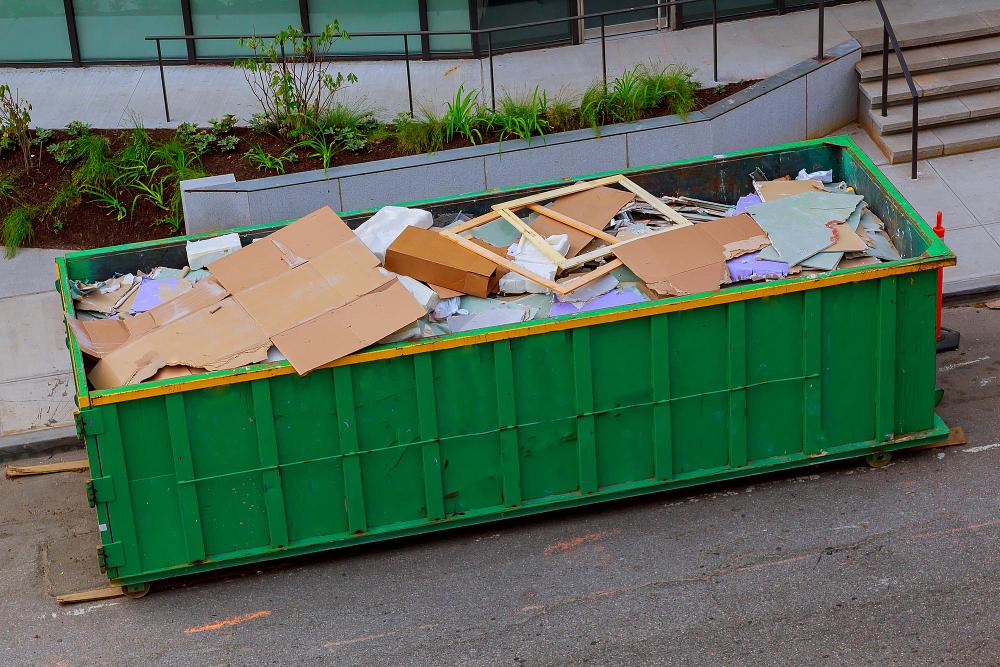
Choosing between a dumpster rental vs. trailer is a common decision point for facility managers, recycling companies, and waste management firms trying to streamline how they move material off-site.
Both options serve the same basic purpose, removing waste or recyclables from a facility, but they operate very differently and are suited to different volumes, schedules, and material types.
We help businesses evaluate both options based on their actual operational needs rather than a one-size-fits-all recommendation.
How Roll-Off Dumpsters Work
A roll-off dumpster, sometimes referred to as a dumpster trailer roll-off, is a stationary container placed on site that gets filled over time and picked up on a scheduled basis. These containers come in a range of sizes and are commonly used for construction debris, general waste, and recyclable material that accumulates gradually throughout a project or operating period.
The dumpster stays in place until it is full or scheduled for pickup, which works well for businesses with predictable, moderate waste generation.
The primary appeal of a roll off dumpster is simplicity. There is no need for on-site staff to operate transport equipment, since a hauling company handles pickup and delivery on a set schedule.
However, this convenience comes with a trade-off: businesses are dependent on the hauler's schedule, which can create bottlenecks if waste accumulates faster than anticipated between pickups.
How Waste Trailers Work
A trailer, by contrast, offers considerably more flexibility for businesses that need to move material more frequently or transport it directly to a processing or recycling facility. Trailers can be positioned at loading docks, filled continuously throughout the day, and hauled away as soon as they reach capacity, without waiting on a third-party pickup schedule.
For operations generating high volumes of recyclable material, particularly those working with a baler or compactor, a trailer setup often integrates more efficiently into daily workflow.
Trailers also give businesses more control over transport logistics. Rather than depending entirely on a hauling company's route and availability, a facility with its own trailer and appropriate towing capability can transport material on its own timeline.
This is particularly valuable for recycling companies and material recovery facilities that need consistent, reliable movement of bulk material.
Comparing Cost and Operational Fit
When comparing a rent dumpster trailer near me search result to a longer-term trailer arrangement, cost structure matters as much as convenience. Dumpster rentals involve a flat fee per pickup plus a rental period charge, which can add up quickly for businesses generating high volumes of waste on a continuous basis. Trailers, whether owned, leased, or rented long-term, shift more of the cost toward equipment access rather than per-pickup fees, which can be more economical for high-volume operations.
Facility footprint is another consideration. Dumpsters require a designated, semi-permanent placement area, while trailers can sometimes be repositioned more easily depending on the site layout. Businesses juggling limited yard space or frequent facility reconfiguration may find trailers offer more operational flexibility over time.
Matching Containers to Your Waste Stream
Beyond the dumpster versus trailer decision, many businesses also need a broader strategy for how different types of waste and recyclable material move through their facility. This is where properly selected containers throughout a facility, paired with the right transport solution, make a measurable difference in efficiency.
A facility that separates cardboard, metal, and general waste at the source, using appropriately sized containers, will generate cleaner, more valuable recyclable material than one relying on a single mixed stream.
For recycling companies and material recovery facilities in particular, this is often where professional guidance adds the most value. Our MRF consulting services help operations evaluate their entire waste and recycling workflow, from initial container placement through final transport, to identify inefficiencies and recommend equipment that actually fits the facility's volume and layout.
At US Recycling Equipment, we bring decades of plant operation experience to these recommendations, which means we are evaluating your waste stream the way an operator would, not just from a sales perspective.
Not sure whether a dumpster or trailer setup fits your operation best? Explore our trailer options, browse our container inventory, or contact our team to discuss the right setup for your facility.
Frequently Asked Questions
Is a dumpster or a trailer better for a small business?
For businesses generating moderate, predictable waste, a roll off dumpster is often simpler since it requires no on-site transport equipment. Businesses with high or continuous volume, especially those processing recyclable material, tend to benefit more from a trailer setup.
How often do trailers need to be emptied compared to dumpsters?
Trailers can be emptied as soon as they reach capacity, giving businesses more control over timing, while dumpsters follow a scheduled pickup arranged with the hauling company. This makes trailers a better fit for high-volume, fast-moving operations.
Can a trailer be used alongside a baler or compactor?
Yes. Many high-volume facilities pair a baler or compactor with a trailer to move compacted material directly to a recycling facility or buyer, reducing the number of trips required compared to hauling loose material.